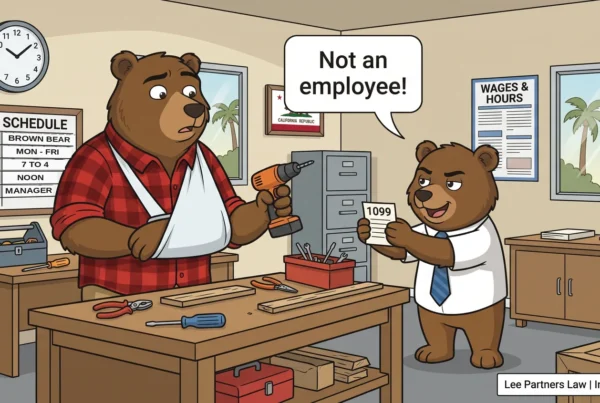
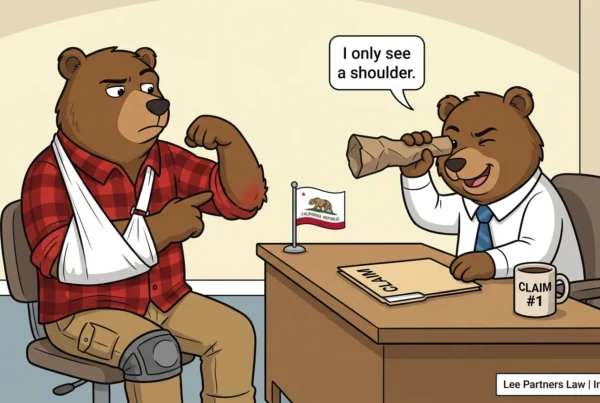
You told your supervisor you were hurt at work. Maybe you asked for a claim form and were told they would “look into it.” Maybe HR said the injury was not serious enough, or your boss said there were no witnesses, you waited too long to report it, or the injury did not really happen at work. Sometimes an employer simply refuses to hand over the form at all.
Here is the important part: your employer does not get to decide whether you are allowed to file a workers’ compensation claim.
In California, once an employer learns about a work injury or illness, it is generally required to give or mail you a DWC-1 claim form within one working day. If your employer will not give you the form, you do not have to wait for them. You can get the DWC-1 yourself and start documenting the claim.
Your Employer Is Supposed to Give You a DWC-1
The DWC-1 is the form used to formally report a California work injury. According to the California Division of Workers’ Compensation, the employer must give or mail it to you within one working day after learning about the injury or illness.
The process is supposed to be simple. You report the injury, the employer gives you the form, you complete the employee section, sign and date it, and return it. The employer then completes its section and sends the claim to the workers’ compensation claims administrator.
We walk through that normal process in our step-by-step guide to filing a California workers’ compensation claim.
The problem is that not every employer follows it.
Get the Form Yourself and Prove You Delivered It
Do not spend weeks asking for the same form.
You can download the DWC-1 directly from the California Division of Workers’ Compensation. Complete the employee section carefully, identify the injury and every body part involved, sign it, date it, and keep a copy. Then give the completed form to your employer.
If the employer has already refused to cooperate, I want proof of when that form was delivered.
The DWC specifically recommends sending a mailed claim form by certified mail with return receipt requested so there is a record of when it was mailed and received.
A surprisingly common workers’ compensation dispute is not what happened to the worker but when the employer first knew about it and when the claim was actually made. A text message to a supervisor, an email to HR, an incident report, photographs, witness messages, medical records and proof of delivery of the DWC-1 can all become important evidence.
Your Employer Does Not Decide Whether Your Injury “Counts”
I have heard variations of the same statements many times:
“You didn’t report it immediately.”
“There were no witnesses.”
“You already had back problems.”
“You finished your shift, so you could not have been hurt that badly.”
“You did not have an accident. Your pain just started over time.”
“We don’t think this is workers’ comp.”
Those may eventually become issues in the case. They are not reasons for an employer to prevent you from filing a claim.
The insurance company can investigate whether an injury occurred, whether work caused it, whether there was timely notice and whether the claimed body parts are industrial. If there is a medical dispute, doctors become involved. If necessary, a workers’ compensation judge can decide disputed issues.
Your supervisor does not get to end that process before it starts by refusing to hand you a DWC-1
What Happens After You Submit the DWC-1
Submitting the claim form starts important parts of the workers’ compensation process.
Within one working day after you file the claim form, your employer must authorize appropriate medical treatment. While the employer and insurance company are deciding whether to accept or deny the claim, an injured worker may receive up to $10,000 in medical treatment.
There is also an important 90-day rule.
If the claim is not denied within 90 days after the claim form is filed with the employer, the injury is generally presumed compensable, subject to the rules governing that presumption.
We explain that deadline in more detail in How Long Does a Workers’ Compensation Insurance Company Have to Investigate My Claim?
This is why I do not like seeing injured workers report injuries informally for weeks or months without creating a clear paper trail.
Dates matter in workers’ compensation.
“Just Use Your Own Insurance”
Be careful.
There is a difference between getting medical treatment because you need care and allowing an employer to pretend a reported work injury never happened.
If you tell your employer you were hurt at work and the response is “use your own insurance,” the employer offers to pay the bill directly, tells you not to involve workers’ compensation, or asks you to tell the doctor it happened outside of work, I would still want the work injury documented.
A back strain that looks minor on Monday may turn into an MRI showing a disc herniation. A shoulder injury may eventually require surgery. A knee injury may keep you off work far longer than expected.
You do not want to discover three months later that there is no clear record you ever told your employer the injury happened at work.
Do Not Let Their Refusal Cost You Your Own Deadlines
An employer refusing to cooperate does not mean you should wait.
California generally has a 30-day notice requirement for reporting an injury, although employer knowledge and the circumstances of the case can matter. There are also statutes of limitation, and the analysis can be very different for a specific accident compared with a cumulative trauma injury that developed gradually.
If significant time has already passed, do not assume your case is automatically dead or that you have unlimited time.
We cover that separately in Is It Too Late to File a Workers’ Compensation Claim in California?
If the insurance company eventually denies the claim, remember that a denial letter is the carrier’s position, not a decision from a workers’ compensation judge.
Claims are denied over disputed medical causation, alleged late reporting, pre-existing conditions, lack of medical evidence and disputes about whether the injury happened at work. The earlier the reporting problem is documented, the better positioned you are to answer those defenses.
We break them down in our guide on what to do after a California workers’ compensation claim is denied.
What If Your Employer Threatens You for Filing?
That is a different problem.
California Labor Code section 132a prohibits certain discrimination against employees because they filed, or made known their intention to file, a workers’ compensation claim.
Not every termination or workplace disagreement after an injury becomes a valid discrimination claim. But if an employer is telling you that you will lose your job, have your hours cut, or face some other punishment for filing, preserve those communications and speak with an attorney.
Do not delete the text messages. Do not throw away the emails.
When I Would Talk to a Workers’ Compensation Attorney
Not everyone who gets hurt at work needs an attorney.
If you report the injury, receive the DWC-1, get appropriate treatment and the claim starts moving normally, you may be perfectly capable of handling the early stages yourself.
I become more concerned when the process never starts: the employer refuses to provide the claim form, will not report the injury to its insurance company, tells you to hide that the injury happened at work, refuses to provide medical treatment, threatens you for pursuing a claim, or disputes the injury before the insurance company has even investigated it.
Before representing injured workers, I spent about 15 years representing employers and insurance companies in California workers’ compensation cases.
That experience taught me that documentation created at the beginning of a claim can become very important months or even years later.
Who was told? When were they told? What did the worker say happened? What body parts were reported? When was the DWC-1 delivered? What did the first medical records say?
Those questions come up repeatedly when a claim is disputed.
If your employer is already making it difficult just to report the injury, I would rather address that problem early.
Your Employer Cannot Stop You From Filing a Workers’ Comp Claim
Your employer does not have to agree that you have a valid workers’ compensation case before you file one.
If they will not give you a DWC-1, get the form yourself, complete it, keep a copy and create proof that you returned it. Get appropriate medical care and make sure the provider knows the injury happened at work.
And if the employer or insurance company continues to block the process, consider getting legal advice before the situation becomes harder to fix.
Lee Partners Law: Work Injury Attorneys represents injured workers throughout California. David A. Lee and Michael E. Lee are both California Certified Specialists in Workers’ Compensation Law and previously represented employers and insurance companies before switching sides.
We regularly handle disputed and denied claims throughout Los Angeles and the San Fernando Valley, as well as Orange County, the Inland Empire, Ventura County, the High Desert, San Diego and surrounding communities.
If your employer will not file your workers’ compensation claim, refuses to give you a DWC-1, or is telling you that your work injury does not qualify, call or text us at 310-295-0822.
We can look at what has happened and tell you what we think your next move should be.
This article provides general information about California workers’ compensation law and is not legal advice for any particular case.