

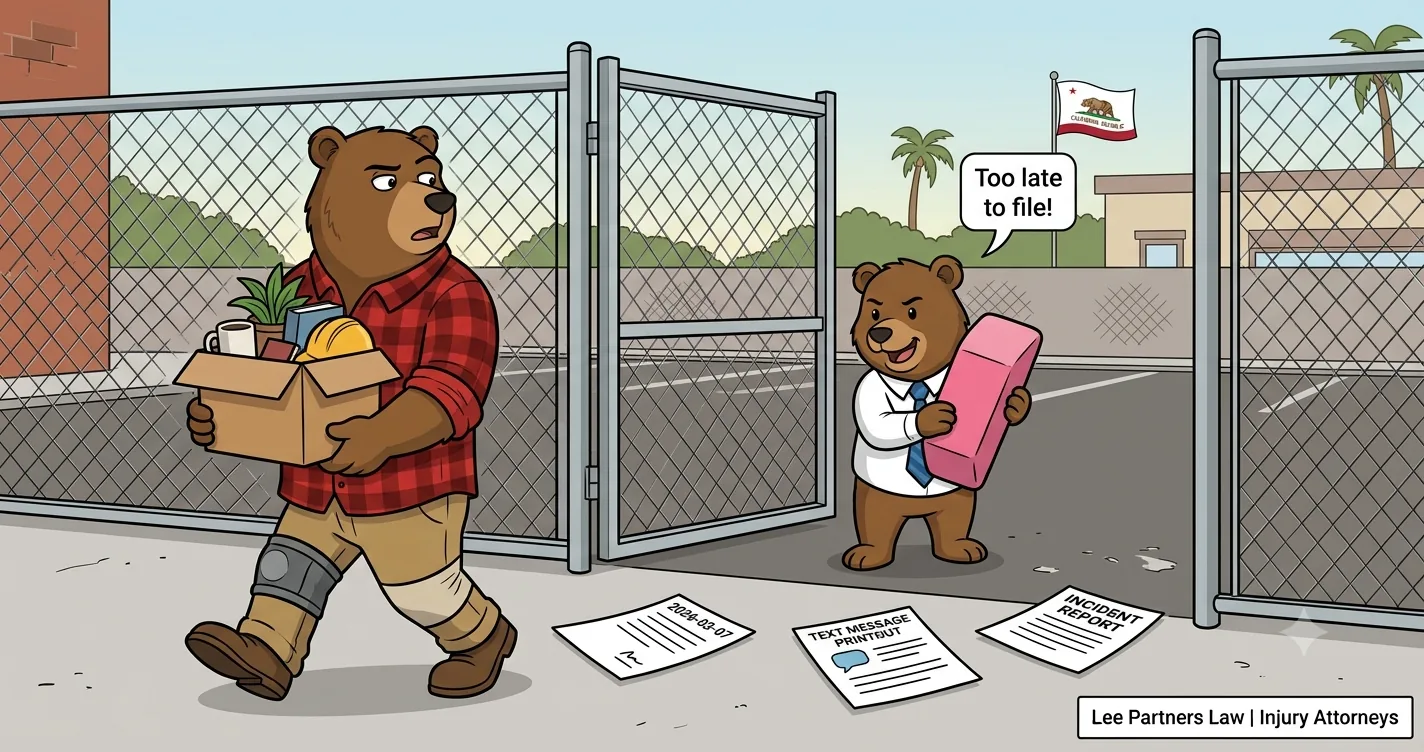

You were dealing with back pain before the layoff. Maybe you told a supervisor, maybe you saw a doctor, or maybe you kept working because you needed the paycheck. Now the job is gone, and someone tells you it is too late to file workers’ comp.
That is not a conclusion you should accept without having the facts reviewed. A claim filed after a firing or layoff can face additional defenses, but leaving the job does not automatically erase a work injury. The timeline and the records often become the center of the dispute.
The notice date can matter as much as your last day
For many physical-injury claims, California’s post-termination defense looks at whether the claim was filed after notice of termination or layoff for an injury occurring before that notice. Notice may come before your final shift. That distinction can be easy to miss when you are focused on finding another job.
Labor Code section 3600(a)(10) provides exceptions, including prior employer notice of the injury, medical records already documenting it, certain injuries between notice and the effective termination date, and certain cumulative injuries with a later legal injury date. Whether an exception applies depends on evidence, not simply on how the claim is described.
For example, consider a Corona employee who reported shoulder pain to a supervisor, went to a clinic, and later received a layoff notice. The earlier messages and clinic records deserve careful review. They may show a very different timeline from an adjuster’s assumption that the injury was first raised after the job ended.
Gradual injuries have their own date-of-injury question
A repetitive lifting injury may develop over months while the worker continues showing up. There may be no single accident date to circle on a calendar. That does not mean the worker gets to choose whichever date helps the case.
Under Labor Code section 5412, the legal date for a cumulative injury involves both disability and knowledge, or reason to know, that the disability was caused by employment. It is not automatically the first day of pain, the last day worked, or the first medical visit.
Our California cumulative trauma guide explains the broader type of claim. In a post-layoff case, the medical and employment history must be examined together. Waiting to see a doctor is not a strategy for moving the injury date.
Were you fired or laid off while dealing with a work injury? Call 310-295-0822 or text Lee Partners Law for a free consultation. We can help identify which dates and documents matter before you assume the claim is over.
Preserve the records before access disappears
Save records you already have lawful access to, especially if your work email or scheduling account is about to be closed. Keep the original messages and dates rather than rewriting them into a new summary that loses the details.
Useful materials include:
- The termination or layoff notice and the date you received it.
- Messages reporting symptoms or asking for lighter work.
- Medical records, visit dates, and work-status notes.
- Schedules and a description of the tasks that caused problems.
- The names of people who knew about the injury before the separation.
Be accurate about earlier symptoms and prior treatment. A medical visit that happened before the layoff can matter even if the visit was through your regular health plan. Tell your attorney what the record actually says, including details you think might hurt the claim.
What if you quit, already had a claim, or have a stress injury?
Resignation, voluntary layoff, and termination are not interchangeable labels. How the employment ended can affect the legal analysis, and a resignation or separation agreement should be reviewed rather than treated as a routine piece of paperwork. A severance agreement does not by itself release a workers’ compensation claim, because Labor Code section 5001 makes a release of workers’ compensation liability valid only when the Workers’ Compensation Appeals Board approves it. Only a Workers’ Compensation Judge can sign off on a settlement of a Workers’ Compensaiton case.
If you already reported or filed the injury before termination, the case presents a different timeline from a newly raised claim. A separate question is whether you were punished because you pursued workers’ compensation. Our article on being fired for filing a workers’ comp claim addresses that issue. Not every firing after an injury is unlawful retaliation.
Psychiatric injuries also have distinct requirements, including special post-termination provisions and a defense involving lawful, nondiscriminatory, good-faith personnel actions. They require separate analysis under Labor Code section 3208.3. The physical-injury exceptions should not simply be copied over to a stress claim.
Common questions about filing after a layoff
Is there a deadline to file workers’ comp after I am let go?
Labor section 5405 generally allows one year from the date of injury, or from the last benefit provided, to start proceedings. There are many defenses to this one-year deadline. We are experts in defeating it based upon the development of case law. The sooner a case is filed, the better.
What if I never told anyone at work about the injury before I was let go?
You can absolutely still file a claim. The facts need to be reviewed before anyone concludes the defense applies. If you saw a doctor and medical records exist that can defeat the Post-Termination defense. On a cumulative trauma case (repetitive job duties caused injuries), the Post-Termination defense can be defeated through the Panel Qualified Medical Examiner process in many cases.
Does a layoff affect my temporary disability payments?
Temporary disability is paid for wage loss caused by the work injury during recovery. If the medical evidence supports that you were unable to work, the fact that the job ended does not by itself end the benefit. Disputes in this situation usually turn on what the doctor said about your ability to work and when, which is another reason the medical records are worth gathering now.
We take this issue to trial all the time and fight hard to get you compensated for 2/3 your salary for the time you are not working. One of our specialties is getting our clients paid temporary disability benefits.
If you believe you might be owed 2/3 your salary reach out to us for a free consultation today.
Getting help in Riverside and nearby cities
For someone in Riverside, Corona, or Moreno Valley, losing work can turn an unresolved injury into an immediate financial problem. Put the claim records together while you still remember the sequence clearly. Other reporting and filing deadlines can apply even if an exception to the post-termination defense appears available.
Lee Partners Law represents injured workers throughout the region. Our Riverside workers’ compensation guide explains the broader claim process. We review the employment history, medical evidence, and insurer’s position before deciding how to move the case forward.
You do not need to figure out the post-termination rules on your own. Call or text us with the basics of the injury and when you learned the job was ending. The consultation is free.
Prefer to write? Use the contact form just below this article and we will get back to you.


